Autor: Firma Senckenberg – Leibniz Institution for Biodiversity and Earth System Research // Senckenberg Gesellschaft für Naturforschung

300,000-year-old Genomes: History of the Schöningen Horses Deciphered

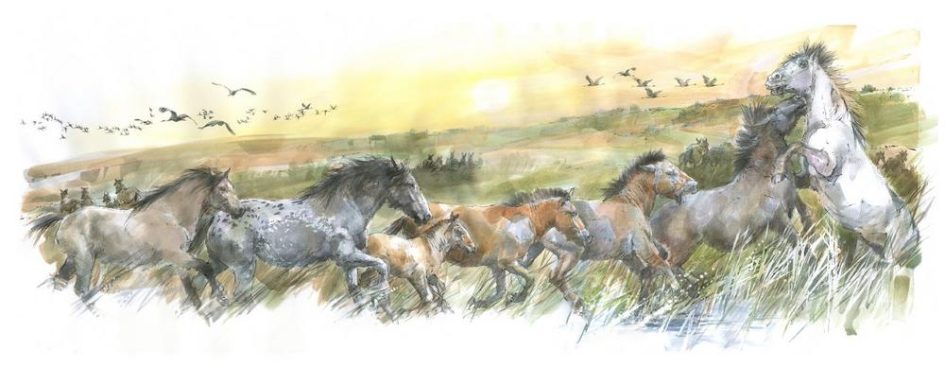
For the first time, a research team from the Senckenberg Centre for Human Evolution and Palaeoenvironment at the University of Tübingen and the Schöningen Research Centre have reconstructed the genomes of an extinct horse species Equus mosbachensis from the archaeological site of Schöningen in Lower Saxony, approximately 300,000 years old. Thanks to exceptionally favorable preservation […]

Read More

Genetic Diversity: Nature’s Underestimated Lifeline

Genetic diversity – the diversity within species – is a crucial yet often underestimated basis for the protection of biodiversity. A recent publication in the journal “People and Nature,” co-led by Senckenberg researcher Deborah M. Leigh, emphasizes the central role of genetic diversity for a “nature-positive” future. This refers to a state in which the […]

Read More

Are We Unique?

An international team led by Senckenberg researcher Prof. Dr. Simon Darroch has presented a new approach to understanding how living organisms fundamentally change their environment – and what this means in terms of the role of modern humans. In their study, now published in the scientific journal “Trends in Ecology & Evolution,” the researchers propose […]

Read More

112-million-year-old Time Capsule: Oldest Amber Insects from South America Discovered

For the first time, researchers in Ecuador have discovered amber fossils from the Cretaceous period on the South American continent. The approximately 112-million-year-old find from the Hollín Formation in the Oriente Basin is one of the oldest known amber deposits in South America. Of particular note are the numerous insect species trapped in the amber, […]

Read More

The Earth’s Lungs: Diversity as a Survival Strategy

In the face of climate change and increasing droughts, the Amazon rainforest – one of the largest and most important ecosystems on Earth – is under ever-increasing pressure. A new study by Senckenberg researchers in the journal “Nature Communications” shows that it is not only the size or species diversity of the forest that is […]

Read More

Beech Forests: Fit for Climate Change?

By combining satellite images with a new type of genetic analysis, a research team led by the Senckenberg Biodiversity and Climate Research Center Frankfurt (SBiK-F) was able to decipher how European beech forests react to climate change. The study, published today in the scientific journal “Global Change Biology,” shows that the timing of leaf emergence […]

Read More

Fossil Find in Syria: Unknown Sea Turtle Discovered

Near the Syrian city of Afrin, an international research team, including researchers from the Senckenberg Centre for Human Evolution and Palaeoenvironment at the University of Tübingen, has discovered a previously unknown fossil sea turtle. The species Syriemys lelunensis, newly named under the aegis of the University of São Paulo, dates from the early Eocene, around 50 […]

Read More

Angola: Wild Animal Trade Threatens Biodiversity and Health

Angola is home to an impressive diversity of species – but the country’s biodiversity is severely threatened by illegal hunting, habitat loss, and the consumption of bushmeat. A research team, including Senckenberg scientist PD Dr. Raffael Ernst, has investigated the wildlife trade in the province of Uíge. In their study, published in the journal “Oryx,” […]

Read More

Small Tools, Big Animals: 430,000-year-old Butchery Investigated

An international research team has published a new study on one of the oldest known sites for the processing of animal meat by humans in the southern Balkans. At Marathousa 1, an archaeological site in the Greek Megalopolis Basin, researchers not only found numerous stone tools that provide clues to human behavior but also remains […]

Read More

Raccoons: Invasion on Four Paws

As part of the joint project ZOWIAC (Zoonotic and Wildlife Ecological Impacts of Invasive Carnivores), a research team from Frankfurt has analyzed hunting data from two decades in 398 German districts. The study aimed to identify the different stages of the invasion of raccoons, originally native to North America, in Germany. The study shows that […]

Read More