Autor: Firma Senckenberg – Leibniz Institution for Biodiversity and Earth System Research // Senckenberg Gesellschaft für Naturforschung

Type Genomics: DNA Treasure in the Collections

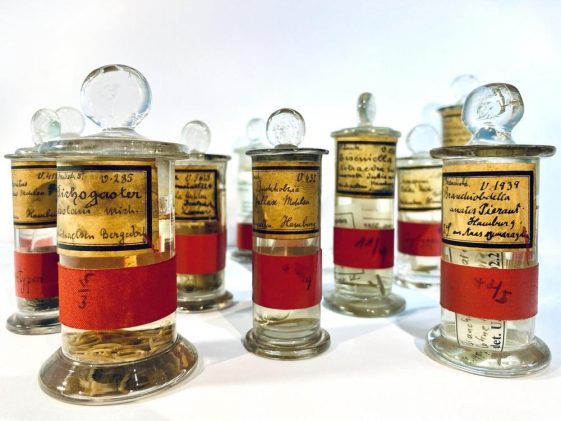
In a joint appeal, an international research team, including Senckenberg scientist Prof. Dr. Steffen Pauls, advocates the targeted and comprehensive genome sequencing of type specimens – the reference specimens of individual species that are kept in natural history collections. In their article, published in the scientific journal “Systematic Biology,” the researchers, led by first author […]

Read More

Tropical Time Machine: With a Teaspoon of Mud Back into the Past

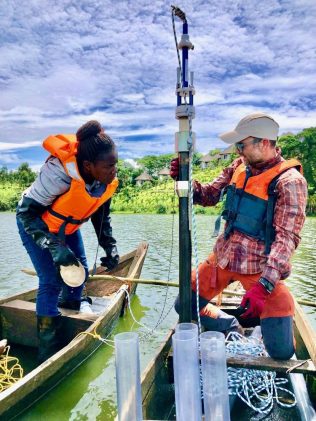
For a long time, researchers believed that the warm and humid climate of the tropics and subtropics destroyed all traces of old genetic material. A new review, led by Senckenberg scientists, now disproves this dogma. Published in the journal “Trends in Ecology & Evolution,” the study shows how ancient environmental DNA can be preserved in […]

Read More

Tiny Archives: Metabolic Molecules Store the Prehistoric World

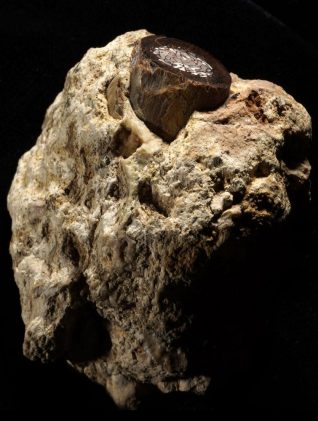
An international research team, including Senckenberg scientists, has developed a new method to investigate what the habitats of prehistoric animals and humans looked like. Their study, led by Prof. Timothy Bromage (New York University) and now published in the renowned scientific journal “Nature,” shows that fossil bones and teeth of animals preserve far more information […]

Read More

Rivers: too little protection in the protected area

Protected areas are meant to preserve endangered species and stabilize ecosystems. But for many European rivers, this protection apparently falls short. This is the finding of a new study led by Senckenberg researchers Dr. James S. Sinclair and Prof. Dr. Peter Haase, which has now been published in the scientific journal "Nature Communications." The international […]

Read More

Bears: Changing the Menu in a Warming Climate

Bears are true omnivores. This flexibility has enabled them to successfully survive in a wide variety of habitats. An international research team led by Senckenberg scientist Dr. Jörg Albrecht has now analyzed ecological and paleoecological data on seven bear species on a large scale for the first time. The results show that most bears can […]

Read More

Hidden gems of the abyss: New Deep-Sea Coral Found Living on Nodules Targeted for Mining

An international research team led by Senckenberg scientist Dr. Nadia Santodomingo and Dr. Guadalupe Bribiesca-Contreras from the UK’s National Oceanography Centre (NOC) have discovered a new species of deep-sea coral that lives attached to polymetallic nodules – the same mineral-rich rocks that are the focus of growing international interest for deep-seabed mining. The coral, Deltocyathus zoemetallicus – now […]

Read More

Ants Worldwide: Diversity Estimated Up To Three Times Higher

Around 14,260 living and 810 fossil ant species are currently known – but this probably constitutes only a fraction of the actual number. A new study, published in the journal “Insect Systematics and Diversity,” shows how modern methods such as DNA sequencing have changed the systematics of ants. Ants colonize almost all habitats and play […]

Read More

“Move BON”: New Global Network for the Study of Animal Movement

Move BON, a new international research network for studying animal movement, has now been officially endorsed by the overarching GEO BON network, which brings together global observations on biodiversity and makes them accessible for research and nature conservation. The new initiative, whose leadership includes researchers from the Senckenberg Biodiversity and Climate Research Center Frankfurt (SBiK-F) […]

Read More

Extinction Confirmed: Cape Verde’s Cone Snail Lost Forever

The IUCN Red List has officially declared Conus lugubris—a marine snail once found only on the north shore of São Vicente, Cape Verde—Extinct. The species, last seen alive in 1987, was driven to extinction by coastal development that destroyed its fragile habitat. While its loss is a sobering reminder of biodiversity’s vulnerability, the story of […]

Read More

Natural recovery of tropical forests needs time

An international research team from the Senckenberg Biodiversity and Climate Research Center Frankfurt (SBiK-F) has investigated how quickly seed dispersal by animals in tropical forests recovers after deforestation. Their study, now published in the scientific journal “Current Biology,” shows that it takes decades for seed-dispersing animals to come back and interact with plants. A crucial […]

Read More