Looking beyond total HCP Levels
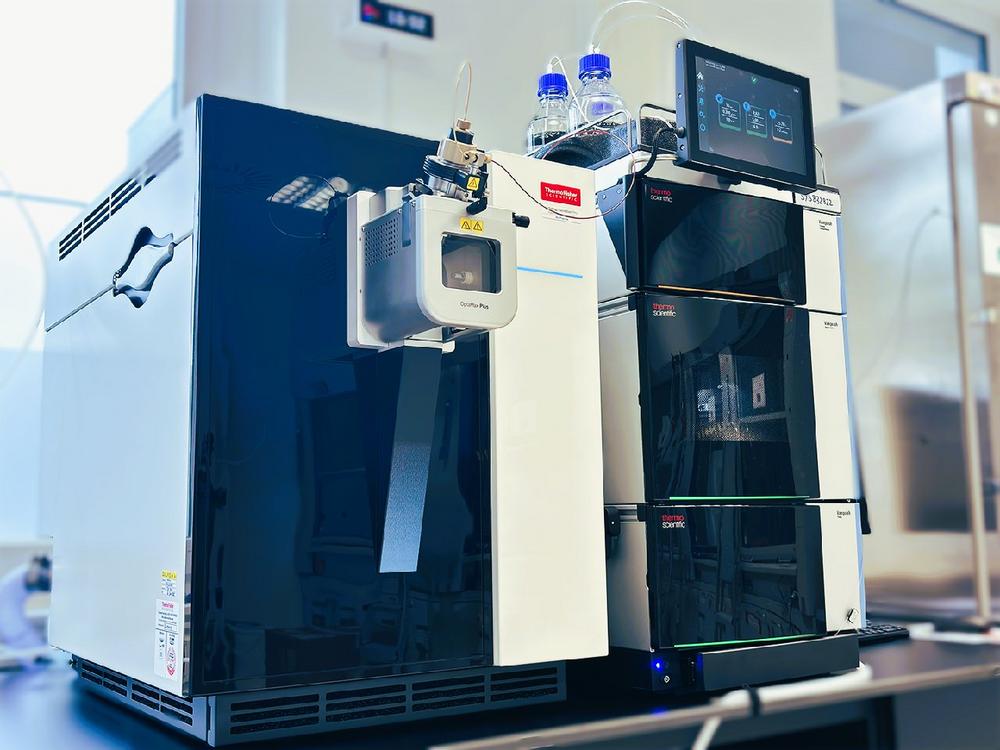
Host cell proteins (HCPs) have long been recognized as critical process-related impurities in the development and manufacturing of biopharmaceuticals. Regulatory expectations clearly emphasize the need to monitor and control residual HCPs throughout development, yet the way these impurities are assessed is rapidly evolving.
For many years, HCP analysis has focused primarily on measuring total HCP levels. While this remains an important quality attribute, today’s increasingly complex biologics require a much deeper understanding of individual HCPs, their biological properties and their potential impact on product quality, efficacy and patient safety.
The question is no longer simply how many HCPs remain. It is increasingly about which HCPs remain, whether they present a potential risk and how confidently they can be detected.
Understanding HCPs Throughout Development
HCP monitoring plays a different role at every stage of biopharmaceutical development. During early process development, comprehensive HCP profiling provides valuable insight into upstream and downstream process performance. Rather than focusing on a single impurity, mass spectrometry enables developers to monitor thousands of individual HCPs simultaneously, allowing process changes to be evaluated with unprecedented analytical depth.
"Modern HCP analytics is no longer just about measuring impurities. It’s about understanding which HCPs remain, how they behave throughout development and whether they represent a potential risk."
Dr. Heiner Falkenberg, Associate Director Mass Spectrometry
As development progresses, the analytical focus shifts. Critical HCPs must be identified, their depletion across purification processes confirmed and, ultimately, highly sensitive quantitative methods established to support release and stability testing.
This progression transforms HCP analysis from a routine quality control exercise into a continuous risk management strategy that accompanies a product throughout its lifecycle.
Moving Beyond Total HCP Quantification
Although traditional ELISA methods remain an established industry standard for measuring total HCP content, they also present an inherent limitation. Because ELISAs rely on antibody reagents, their ability to detect individual HCPs depends on the specificity and coverage of those antibodies. If certain HCPs are not recognized, they may remain undetected despite being present in the final product. Understanding these potential detection gaps has therefore become an increasingly important aspect of modern HCP risk assessment.
To address this challenge, quantitative immunoaffinity chromatography coupled with mass spectrometry (IAC-MS) enables the identification of HCPs that are recognized by an ELISA reagent as well as those that are not. This provides a detailed understanding of antibody coverage and allows analytical strategies to be refined where necessary.
Rather than replacing established ELISA methods, this approach complements them by adding molecular-level insight into assay performance.
"Mass spectrometry transforms HCP analysis from a single measurement into a comprehensive understanding of process performance, impurity profiles and product quality."
Dr. Daniel Waldera-Lupa, Director Analytical Development
From Process Understanding to Risk-Based Decision Making
Comprehensive HCP analytics also supports process development itself. Mass spectrometry makes it possible to monitor how individual HCPs behave throughout upstream and downstream processing, providing a detailed picture of impurity clearance and purification efficiency.
This level of information allows development teams to identify persistent or potentially high-risk proteins early, evaluate purification strategies and confirm that critical HCPs are effectively removed before release testing. Instead of relying solely on endpoint measurements, manufacturers gain a data-driven understanding of how process decisions influence impurity profiles across development.
"Not every host cell protein presents the same level of risk. Effective HCP analytics therefore focuses analytical effort where it creates the greatest value for product quality and patient safety."
Dr. Heiner Falkenberg
Focusing on HCPs That Matter Most
Not every HCP presents the same level of risk.
Some HCPs may remain at very low concentrations without affecting product quality, while others possess enzymatic activity or other biological properties that warrant particular attention. Modern analytical workflows therefore enable HCPs to be classified according to their potential risk, combining quantitative proteomics, ELISA coverage analysis and targeted quantification into an integrated assessment strategy.
This risk-based approach helps developers decide whether existing analytical methods provide sufficient confidence or whether additional assay development, process optimization or complementary analytical techniques are required.
Building Confidence Through Complementary Analytics
No single analytical technology can answer every question surrounding HCPs. Instead, today’s most robust strategies combine multiple complementary approaches. Broad proteomic profiling supports process understanding, IAC-MS evaluates ELISA antibody coverage, targeted LC-MS methods enable highly sensitive quantification of individual high-risk HCPs and activity-based profiling adds functional information for enzymatically active proteins.
"Combining complementary analytical technologies enables developers to move beyond HCP detection towards comprehensive, science-based risk assessment."
Dr. Daniel Waldera-Lupa
Together, these analytical tools provide developers with a comprehensive understanding of HCPs throughout biopharmaceutical development while supporting informed, science-based decisions for product quality and regulatory compliance.
As biologics continue to increase in complexity, HCP analytics is evolving from impurity detection to comprehensive analytical risk assessment. By combining orthogonal technologies with detailed molecular insight, developers can strengthen process understanding, improve confidence in product quality and establish a more robust foundation for successful biopharmaceutical development.
"Knowing what an ELISA detects is important. Knowing what it does not detect can be equally critical for an informed HCP risk assessment."
Dr. Daniel Waldera-Lupa
Explore more with the latest On-Demand ProtaGene Webinar
To explore this topic in greater depth, watch the on-demand webinar “HCP Detection Gap Risk Mitigation: Quantitative IAC-MS for ELISA Antibody Reagent Coverage Determination”, presented by Dr. Daniel Waldera-Lupa.
The session provides additional scientific background on quantitative IAC-MS, ELISA coverage analysis and practical strategies for strengthening HCP risk assessment across biopharmaceutical development.
Additional resources are available at: https://www.protagene.com/resources/?topic=host-cell-proteins-hcps
ProtaGene GmbH
Inselwiesenstr. 10
74076 Heilbronn
Telefon: +49 (7131) 745040
Telefax: +49 (7131) 74504299
https://www.protagene.com
