Silent Extinction: Loss of Genetic Diversity
With its Red List of Threatened Species, which comprises more than 163,000 species, the International Union for Conservation of Nature (IUCN) defines the global standard for assessing the risk of extinction. “These assessments directly influence the prioritization of conservation resources, the urgency of measures, and their concrete implementation,” explains Prof. Dr. Deborah Leigh from the Senckenberg Research Institute and Natural History Museum Frankfurt and Goethe University Frankfurt, and she adds, “Although genetic diversity is of central importance for the long-term survival of each species, it is only rarely considered in the assessments at this point. This is partly due to the fact that genetic or genomic data – i.e., information from the direct DNA sequencing of a species – is not yet widely available, and partly due to the lack of standardized methods for its integration.”
Currently, assessments are based on criteria relating to demographic trends and habitat loss and generally derive the extinction risk at the species level. Genetically distinct units within a species are often not considered systematically, and there is a lack of standardized methods for delineating such units. “As a result, important components of biodiversity remain invisible – in particular, genetic differences that are crucial for adaptability and long-term stability,” says Leigh.Together with researchers from Australia, Denmark, Germany, Great Britain, Norway, Romania, Spain, South Africa, and the USA, she therefore calls for a stronger focus on units within species in the newly published study. These include “Evolutionarily Significant Units” (ESUs) and subpopulations.
“We define ESUs as lineages within a species that undergo very little genetic exchange. As a result, they develop largely independently of each other, which leads to the formation of local, unique adaptations and genetic variants that do not occur in other parts of the species’ range,” explains the Frankfurt-based researcher. “By specifically assessing such units within a species, we can help to slow down the loss of genetic diversity. This is achieved by helping conservation managers to identify those units that are at particularly high risk of extinction, with the aim of facilitating customized management and conservation measures. Our approach is thus intended to help curb the decline in genetic diversity without having to rely on cost-intensive genetic data that is only available to a limited extent to date.”
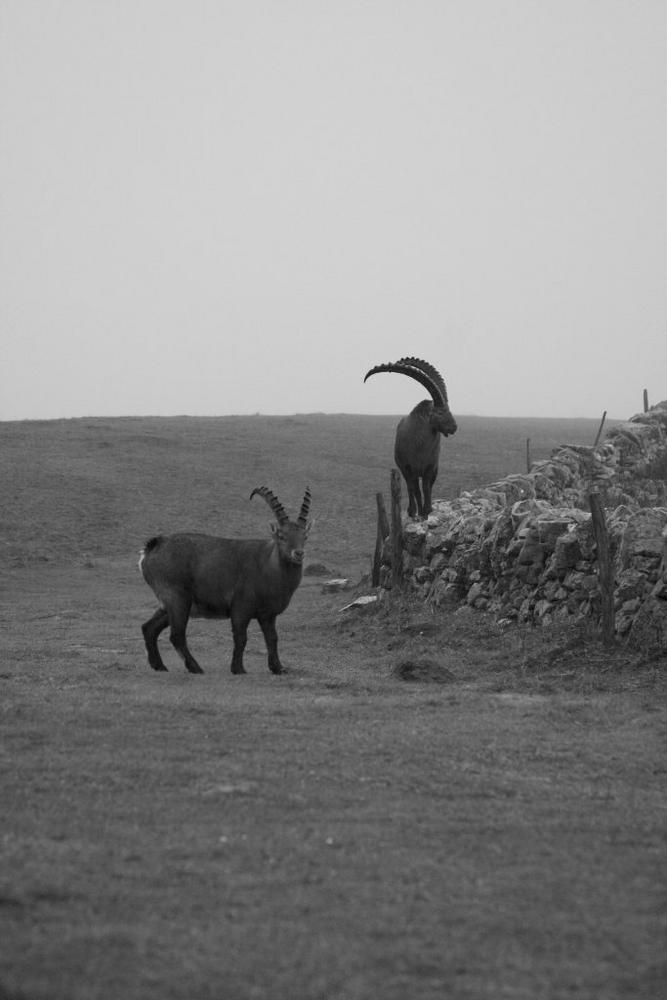
In addition to the IUCN Red List, the more recent Green Status Assessment also deals with the recovery of species. However, genetic diversity is not directly taken into account here either. The Senckenberg researcher gives an example: “Some species received high recovery ratings from the IUCN due to increasing population numbers, even though they had permanently lost a large part of their genetic diversity – including the Alpine ibex.” Capra ibex was almost wiped out in the 19th century due to intensive hunting. Fewer than 100 animals survived in northern Italy, and although over 40,000 animals now live in the Alps, all of the restored populations are descendants of these few individuals. This has led to greatly reduced genetic diversity and increased vulnerability to disease and environmental change. “The original genetic diversity will not be restored in our lifetime but must be considered in order to create an accurate recovery assessment and a sound management plan,” adds Leigh.
The international research team now presents a standardized approach that can be used to identify and distinguish both subpopulations and evolutionarily significant units (ESUs). The newly developed concept combines a variety of data sources, including classical genetic analyses, geographical distribution, and ecological differences as well as traditional and indigenous knowledge. The aim is to incorporate the different types of data that may be available to conservation managers in Germany and around the world while ensuring consistent standards. The approach is currently undergoing extensive testing to enable its integration into species conservation assessments, particularly in terms of recovery potential and extinction risk, according to the study.
“At the UN Conference on Biological Diversity in 2022, nearly 200 countries adopted new targets on genetic diversity as part of the Kunming-Montreal Global Biodiversity Framework. We hope that our work will contribute to achieving these goals. Genetic diversity is a crucial factor for the survival of species. It strengthens fitness, adaptability, and resistance to environmental change and disease. Increased integration of genetic aspects into conservation programs is urgently needed to halt the global loss of diversity, plan more specific conservation programs, and allocate resources more effectively,” adds Leigh in conclusion.
Publication: Julia C Geue, Laura D Bertola, Paulette Bloomer, Anna Brüniche-Olsen, Jessica M da Silva, J Andrew DeWoody, Ancuta Fedorca, José A Godoy, Catherine E Grueber, Margaret E Hunter, Christina Hvilsom, Evelyn L Jensen, Alexander Kopatz, Anna J MacDonald, Silvia Pérez-Espona, Antoinette J Piaggio, Jennifer Pierson, Isa-Rita M Russo, Helen Senn, Gernot Segelbacher, Paul Sunnucks, Cock van Oosterhout, Deborah M Leigh, A practical framework for identifying genetic subpopulations and ESUs: Insights for IUCN assessments and broader management, BioScience, 2026;, biag042, https://doi.org/10.1093/biosci/biag042
Senckenberg – Leibniz Institution for Biodiversity and Earth System Research // Senckenberg Gesellschaft für Naturforschung
Senckenberganlage 25
60325 Frankfurt
Telefon: +49 (69) 7542-0
Telefax: +49 (69) 746238
http://www.senckenberg.de
